Stay up to date with the latest stories and news from PCOM on Google.
Add us on Google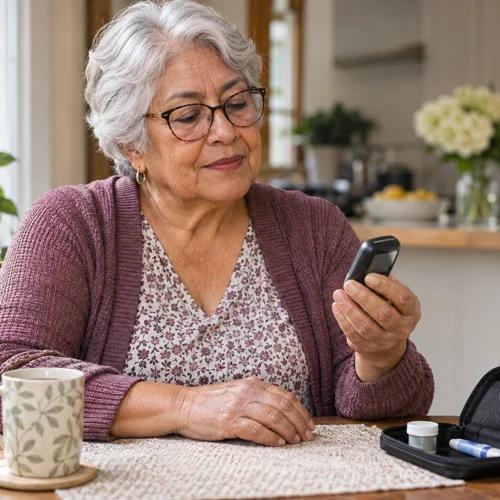
The American Diabetes Association reports nearly 29% of Americans 65 and older live with type 2 diabetes, and almost half of adults 65 and older have prediabetes.
With Diabetes Awareness Month observed in November, Sara (Mandy) Reece, PharmD, CDCES, BC-ADM, BCACP, FADCES, FCCP, dean of the School of Pharmacy at PCOM Georgia, shares what older adults need to know about type 2 diabetes and offers tips for managing the condition.
Prediabetes can have no noticeable symptoms, so it is important to have regular screenings. “If your blood sugar test is normal, ask your provider how often you should be screened; testing every three years is common guidance. If you have prediabetes, you may need annual testing,” Reece said.
Frequent urination, increased thirst, blurry vision, fatigue, slow-healing sores, or unexplained weight loss can be signs of high blood sugar. Reece recommends telling your primary care provider if you notice these symptoms occurring more regularly.
Older adults, especially those taking insulin or medications such as sulfonylureas, can be at greater risk for low blood sugar. Symptoms can include shakiness, sweating, dizziness, or confusion, and can lead to a greater risk of falls in older adults. “If your provider has advised you to use the “Rule of 15,” take 15 grams of fast-acting sugar- such as 4 ounces of juice or regular soda- then recheck your blood sugar after 15 minutes. Follow your care team’s instructions for treating lows.”
A1C (also called HbA1c or glycated hemoglobin test) is a blood test that measures average blood sugar, or glucose levels. “A1C goals should reflect your overall health. For healthy older adults, a goal below 7–7.5% may be appropriate, whereas with multiple health conditions, memory difficulties, or a higher risk of low blood sugar may have a less strict goal, of below 8%. Talk with your provider about what range makes sense for you.”
A continuous glucose monitor (CGM) shows your blood sugar in real time, so you can see how food, activity, and medications affect it, with many devices alerting you before your blood sugar significantly drops. Medicare plans tend to cover CGMs for people who use insulin or have had reported problematic lows.
“Memory changes, depression, bladder-control, muscle loss, balance problems can make diabetes harder to manage. Share these concerns with your healthcare provider or pharmacist so your care plan can be adjusted to best fit your needs,” Reece says.
Low-impact cardio, strength training, and balance exercises can help manage blood sugar and support healthy aging. Options include walking, swimming, light weights, resistance bands, yoga, and tai chi, while eating balanced meals can help maintain blood sugar. It’s important to talk to your provider before starting a new routine or diet.
“Diabetes care is individual,” said Reece. “As you age, you must work with your healthcare provider to determine goals that are appropriate for you and allow you to feel good and live your best life.”
PCOM Georgia has been serving students and the community for 20 years as a branch campus of Philadelphia College of Osteopathic Medicine (PCOM), a private, not-for-profit, accredited institution of higher education established in 1899. Located in Suwanee (Gwinnett County), PCOM Georgia offers doctoral degrees in osteopathic medicine, pharmacy and physical therapy. Graduate degrees are offered in biomedical sciences, medical laboratory science and physician assistant studies. The campus joins PCOM South Georgia in Moultrie in helping to meet the healthcare needs of the state. Emphasizing "a whole person" approach to care, PCOM Georgia focuses on educational excellence, interprofessional education and service to the community. For more information, visit pcom.edu or call 678-225-7500. The campus is also home to the Georgia Osteopathic Care Center, an osteopathic manipulative medicine clinic, which is open to the public by appointment. For more information, visit pcomgeorgiahealth.org.
For general media inquiries, please contact the Office of Marketing and Communications at 215-871-6300 or communications@pcom.edu. Visit our media relations page to view contact information for public relations personnel.
Joy Williford
Assistant Director, News and Media Relations
Office of Marketing and Communications
Email: joyde@pcom.edu
Office: 470-572-7558