
Stay up to date with the latest stories and news from PCOM on Google.
Add us on GooglePCOM South Georgia Expert Separates Cyclospora Facts From Fiction
July 24, 2026
By now, you’ve likely heard or read about what’s being called the “produce poop parasite” that has reportedly sickened thousands across the United States. While there has been much debate about foods linked to the outbreak, the culprit behind the gastrointestinal illness has been identified as Cyclospora, a microscopic parasite that causes cyclosporiasis.
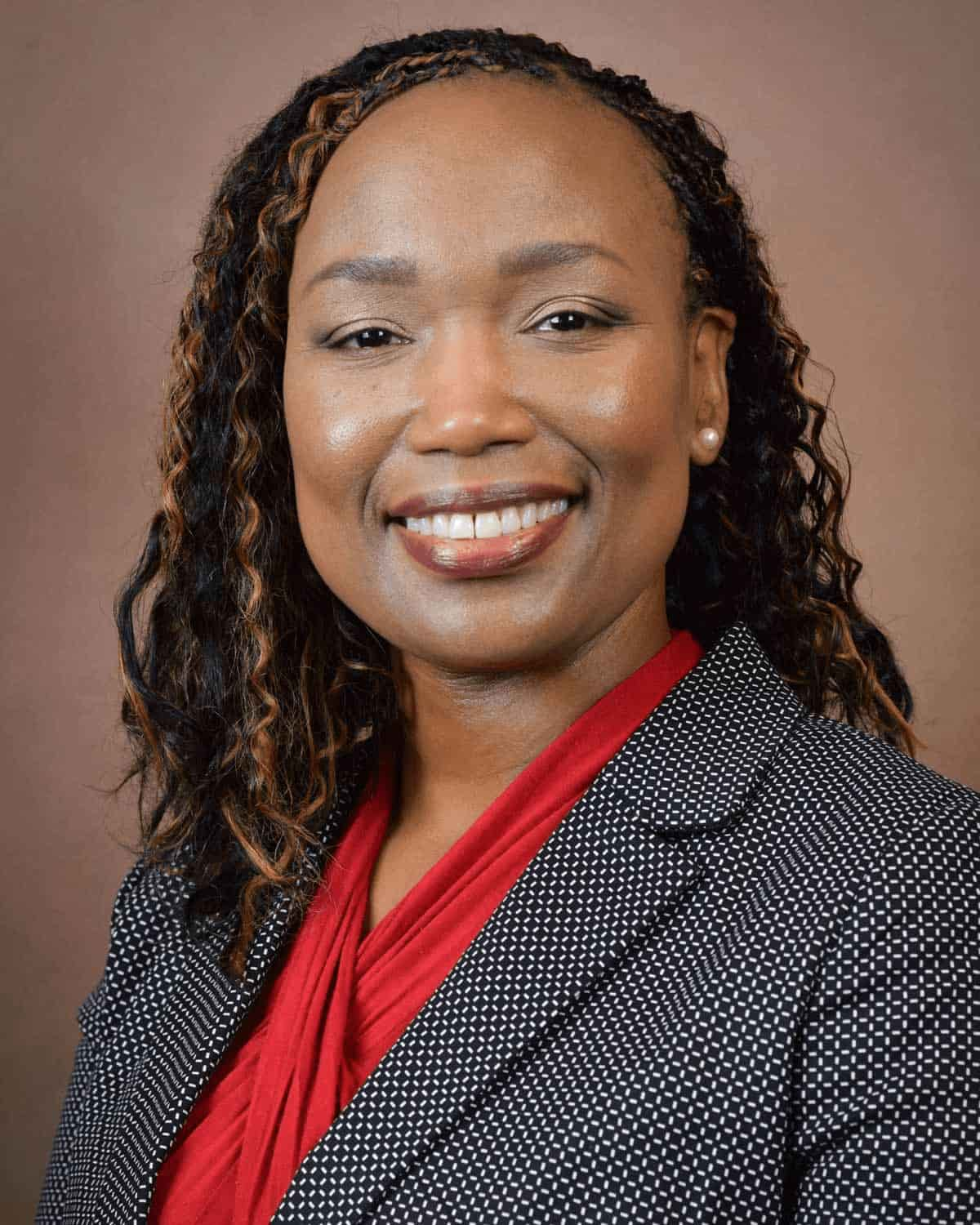
Cyclospora is a pathogen, specifically a parasite. Stacie Fairley, PhD, an associate professor of microbiology and immunology at PCOM South Georgia, teaches courses on parasites and pathogens to first-year Doctor of Osteopathic Medicine (DO) students.
“These topics are new to many students but are important for them to learn as future physicians,” Fairley said. “They need to know the right questions to ask their patients and how to communicate on a patient level. I try to use real-world examples to explain things like the Cyclospora parasite.”
One of Fairley’s favorite classroom examples compares the foodborne parasite Cyclospora to a toxic dating relationship. Like a harmful partner, the parasite takes from its host without giving anything in return, causing illness while offering no benefit. Just as a person cannot truly heal until they leave an unhealthy relationship, the body cannot fully recover until the parasite has been eliminated.
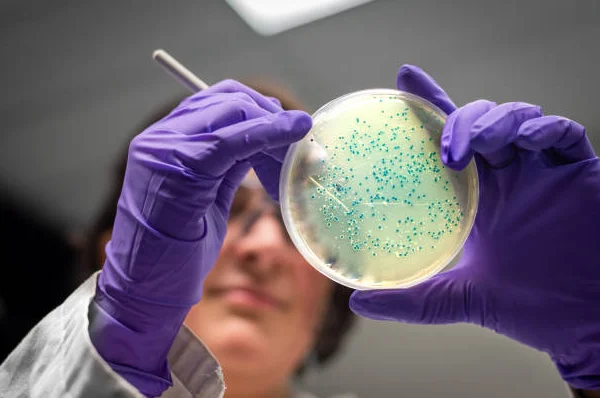
Unlike other common foodborne illnesses, such as Salmonella and Escherichia coli, it is not typically associated with raw or undercooked meat. Instead, it is most often linked to fresh produce and water used to grow it. The parasite can cause severe diarrhea.
“Despite its recent notoriety in the news and on social media, Cyclospora is not new,” said Fairley. “We’re just better at detecting it now. Because it isn’t routinely included in standard stool testing, many cases go undiagnosed. Adding to the challenge, symptoms usually don’t develop until about a week after someone consumes contaminated food, making it difficult for patients to connect their illness to what they ate.”
Most healthy people will likely recover quickly; however, experts say that anyone who has been sick for more than three days should see a physician. Those who are immunocompromised, including people with HIV or AIDS, those undergoing chemotherapy, older adults, and young children, should seek treatment promptly.
“Do not be embarrassed by your symptoms,” Fairley said. “Be transparent with your doctor so they know what to test for, as other pathogens can cause similar symptoms. Diarrhea, while unpleasant, is your immune system’s way of trying to rid your body of the parasite.”
Robyn Long, DO, MS, director of the OMM Scholars Program and an assistant professor of Family Medicine/OMT at PCOM South Georgia, owns Harvest Health, a primary care practice in Cairo, Georgia, and said her practice saw an increase in patients with prolonged diarrhea several weeks before Cyclospora became a widespread topic online.
“A month ago, we saw an uptick in patients with diarrhea lasting one to two weeks, but Cyclospora is not a condition we routinely test for,” Long said. “Looking back, I wonder if the parasite could have caused some of those cases. Thankfully, these were not severe cases, so proper hygiene was emphasized.”
To reduce the risk of infection, experts recommend washing your hands before and after handling produce, and washing fruits and vegetables thoroughly. Consider buying locally grown produce. Cook produce when possible. Long also recommends prioritizing handwashing over hand sanitizer. Cyclospora is not easily spread from person to person because the parasite is not immediately infectious after it leaves the body.
“Given the discussions around Cyclospora online, there is misinformation spreading about the parasite,” said Fairley. “Do not avoid fruits and vegetables altogether, or be afraid to eat healthy foods because of Cyclospora. The benefits outweigh the risks as long as you practice proper food safety.”
You May Also Like:
About PCOM South Georgia
In 2019, Philadelphia College of Osteopathic Medicine (PCOM), a premier osteopathic medical school established in 1899, extended its commitment to the Southeast by establishing PCOM South Georgia. An additional teaching location in Moultrie, Georgia, PCOM South Georgia offers both a full, four-year medical program leading to the Doctor of Osteopathic Medicine (DO) degree and a Master of Science in Biomedical Sciences. PCOM is a private, not-for-profit institution that trains professionals in the health and behavioral sciences fields. Joining PCOM Georgia in Suwanee in helping to meet the healthcare needs of the state, PCOM South Georgia focuses on educating physicians for the region. For more information, visit pcom.edu or call 229-668-3110.
Contact Us
For general media inquiries, please contact the Office of Marketing and Communications at 215-871-6300 or communications@pcom.edu. Visit our media relations page to view contact information for public relations personnel.
Connect with PCOM South Georgia
Media Inquiries
Jamie W. Head, MA
Public Relations and Social Media Manager
Office of Marketing and Communications
Email: jamiehe@pcom.edu
Cell: 229-873-2003