
Stay up to date with the latest stories and news from PCOM on Google.
Add us on GoogleThen and Now: Medical Laboratory Science
PCOM at 125
August 13, 2024
In the 125 years since its founding, PCOM has developed a long history of teaching students in laboratory settings within different fields of scientific research. As we honor the College's 125th anniversary, Evanné Casimir, a member of the Medical Laboratory Science (MLS) class of 2025 at PCOM Georgia, considers the growth of the field and her goals for the future of research.
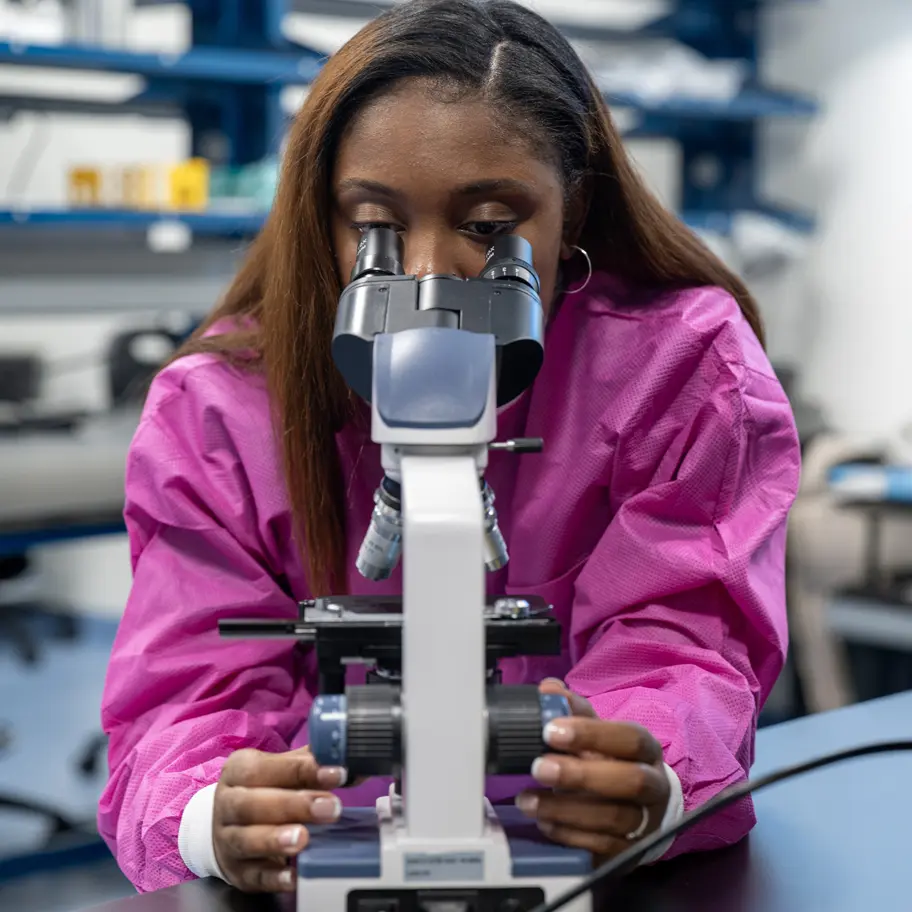
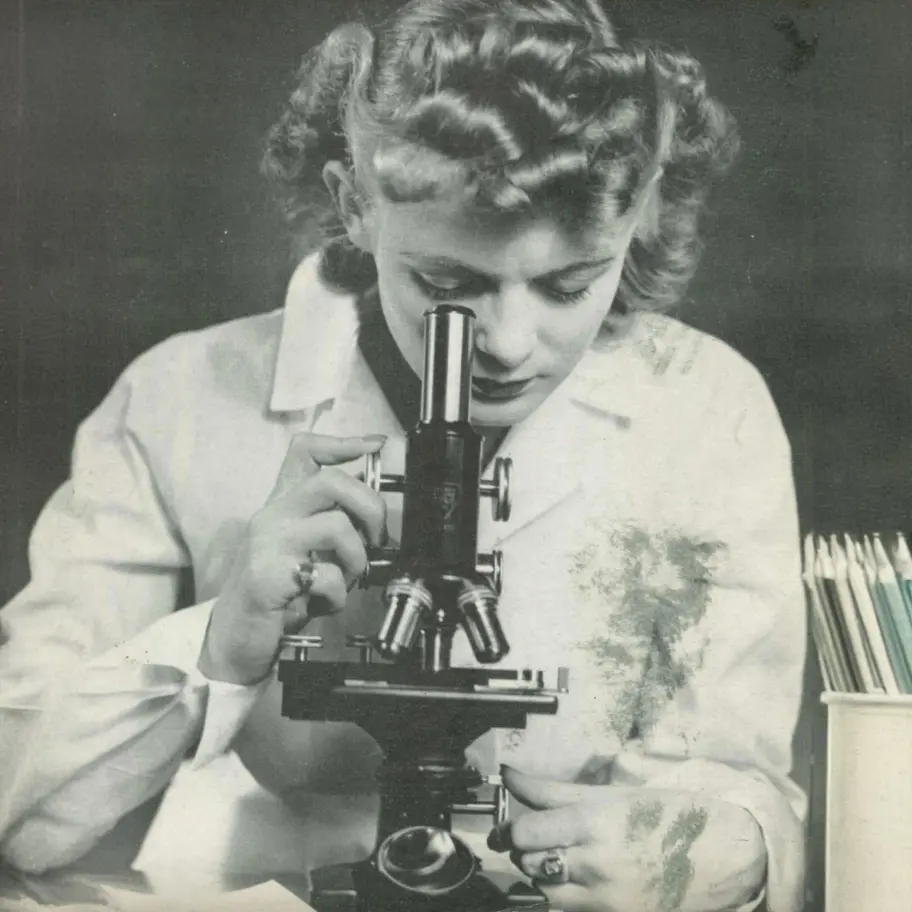
Source (left): Digest December 1949 issue
In the black and white photo on the left, a PCOM (then PCO) student examines a slide through a microscope in 1949. The portrait was featured on the cover of the December 1949 issue of Digest Magazine, which discusses a new Isotope Laboratory in the works at PCOM.
Reflecting on the 1949 researcher's impact on future generations of scientists, Casimir considered the potential of her own academic and professional journey.
“As a first-generation student and a Black woman, I hope to continue the legacy by making significant advancements in the field and serving as a role model for other underrepresented individuals in STEM,” Casimir said. “My ultimate goal is to break barriers, promote diversity, and inspire the next generation of talented professionals in the medical laboratory science field.”
PCOM Georgia didn't have an MLS program in 1949, and Casimir believes that changes in the field in the decades since then indicate significant progress and developments in research and healthcare.
“This growth demonstrates the importance of continuously adapting and evolving healthcare services to meet the needs of patients and healthcare providers,” she said. “It also highlights the critical role that medical laboratory scientists play in improving patient care and advancing medical research.”
Casimir is enthusiastic about the potential for new discoveries and innovations in the field, and is eager to contribute to the development of new technologies, collaborate with passionate healthcare professionals, and work toward advancing diagnostic testing and patient care standards.
“My role allows me to make a meaningful impact on healthcare outcomes and improve the quality of life for patients, which is fulfilling and motivating,” said Casimir. “I feel honored to be continuing the tradition of hands-on learning in laboratory settings and contributing to scientific research. Being a part of this legacy motivates me to continue learning and growing in my field to make a positive impact on the lives of others.”