
Stay up to date with the latest stories and news from PCOM on Google.
Add us on GooglePCOM Study Explores How Cannabis-based Therapy Reduces Chronic Neuropathic Pain
April 15, 2026
At PCOM, medical students are contributing to research on cannabis-based therapies for chronic neuropathic pain, working under the direction of faculty mentor Frederick J. Goldstein, PhD, FCP, a professor of clinical pharmacology, whose work focuses on pain management and analgesia. Their collaboration has resulted in a two-patient case series examining an oral THC:CBD formulation in the April 2026 issue of the Journal of Integrated Primary Care (JIPC).
The publication, “Integrating Oral THC:CBD Into Chronic Neuropathic Pain Management in Primary Care: A Two-Patient Observational Case Series,” offers an early look at how cannabis-based therapies may improve analgesia, sleep and daily functioning for patients whose symptoms are not well managed by traditional medications. Just as importantly, it reflects how students are learning to participate in clinical research—not as observers, but as contributors.
Inside the Research Process

Osteopathic medical students Tytianna Robinson (DO '27) and Camryn Butera (DO '27) became involved in Goldstein's Clinical Pain Research Group in their first year of medical school; it operates outside of formal coursework. The goal is to provide hands-on experiences with patients enrolled in his ongoing study—an approach that differs from classroom learning or simulated encounters.
In developing the case series, student teams conducted patient interviews, reviewed clinical data and contributed to shaping the written report. Alexandra Montana (DO '27), a member of the student research team, described how the interviews shaped her clinical perspective.
“As part of the team that interviewed patients, I gained valuable experience listening to patients and understanding how chronic pain affects individuals' daily lives,” she said. “This experience strengthened my ability to provide patient-centered care as a future physician.”
Robinson and Butera led the writing process, compiling findings, responding to reviewer feedback and navigating submission. The experience provided a foundation for understanding how research functions in practice.
“It gave me a strong foundation going into third year,” Butera said. “I've been able to build on that experience in other research projects, and I attribute that to the work we did here.”
From Patient Experience to Publication

The study is supported by a grant from Organic Remedies. It focuses on chronic neuropathic pain—a complex condition caused by nerve damage and often resistant to standard treatments such as nonsteroidal anti-inflammatory drugs (NSAIDs) or opioids. Symptoms may include burning, tingling, numbness or electric shock-like sensations. In his work with terminal patients, Goldstein also created the term “suicidogen” to describe any physical or mental factor that causes a person to want to end their life—emphasizing that inadequate pain management can be one such factor.
Goldstein's research explores whether an oral THC:CBD capsule can provide relief where other therapies fall short. In the two cases described, both patients reported reductions in pain alongside improvements in sleep and daily functioning. Both were also able to reduce their use of other pain medications.
“Seeing patients decrease or even stop other medications stood out to me,” Robinson said. “It showed that the treatment was making a real difference.”
Butera emphasized the importance of looking beyond numerical pain scores. This broader focus reflects an osteopathic approach to care, which emphasizes treating the whole person rather than isolated symptoms. Chronic pain affects not only the body but also a patient's mental and social well-being—making a patient's ability to function in daily life an essential measure of treatment success.
“A number doesn't fully capture what someone is experiencing,” she said. “Quality-of-life measures help us understand how pain is actually affecting their daily life—what they're able to do, how they're functioning.”
A key component of the study is its structured approach to dosing. Rather than relying on less standardized forms of cannabis use, such as inhalation or edibles, the study uses a controlled oral formulation with measured dosing increments. Both patients achieved symptom relief without reaching the highest recommended dose—an outcome that suggests effectiveness without escalation.
“Oral dosing allows for consistency and measurement,” Robinson said. “Having data—even at a small scale—can make both patients and providers more open to considering it as an option.”
Broadening Impact Through Ongoing Study
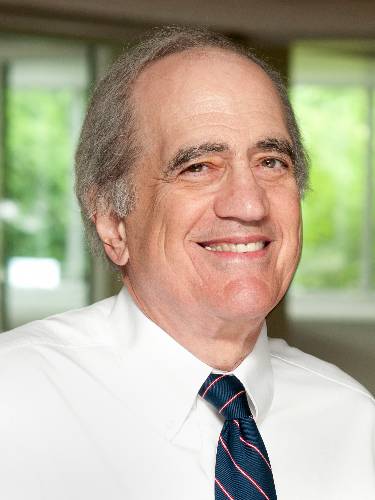
For Goldstein, involving students in the research process is intentional. The group's structure allows students to participate at multiple levels—from patient interaction to contributing to case write-ups—creating a collaborative, tiered learning model.
“This is an opportunity for students who are interested to gain experience—interviewing patients, working with data, writing for publication,” he said. “Being able to talk about research in an interview for a residency position is helpful for a senior medical student applicant. It shows initiative and engagement.”
The case series represents an early step in a growing body of work. In 2024, initial findings from Goldstein's study showed consistent reductions in neuropathic pain following daily THC:CBD administration, and many participants have also reported improved sleep and broader quality-of-life gains. While the two-patient case series is not designed to establish definitive clinical conclusions, it contributes to a growing evidence base around cannabis-based therapies in pain management.
In March, Goldstein presented findings from the broader study at the national meeting of the United States Association for the Study of Pain (USASP) in Philadelphia, highlighting PCOM's role in advancing research on alternative approaches to pain management. The work also reflects a broader shift in the field toward identifying effective, evidence-based alternatives to opioids for chronic pain.
“In medicine, we learn a great deal from individual cases,” Goldstein said. “This highlights potential, and with more studies, this could become a useful tool in managing chronic pain. This is part of building that knowledge.”
You May Also Like:
About Philadelphia College of Osteopathic Medicine
Established in 1899, Philadelphia College of Osteopathic Medicine (PCOM) has trained thousands of highly competent, caring physicians, health practitioners and behavioral scientists who practice a “whole person” approach to care—treating people, not just symptoms. PCOM, a private, not-for-profit accredited institution of higher education, operates three campuses (PCOM, PCOM Georgia and PCOM South Georgia) and offers doctoral degrees in clinical psychology, educational psychology, osteopathic medicine, pharmacy, physical therapy, and school psychology. The college also offers graduate degrees in applied behavior analysis, applied positive psychology, biomedical sciences, forensic medicine, medical laboratory science, mental health counseling, physician assistant studies, and school psychology. PCOM students learn the importance of health promotion, research, education and service to the community. Through its community-based Healthcare Centers, PCOM provides care to medically underserved populations. For more information, visit pcom.edu or call 215-871-6100.
Contact Us
For general media inquiries, please contact the Office of Marketing and Communications at 215-871-6300 or communications@pcom.edu. Visit our media relations page to view contact information for public relations personnel.
Connect with PCOM
Media Inquiries
Kristen Hopf
Communications Content Specialist
Office of Marketing and Communications
Email: kristenho1@pcom.edu
Office: 215-871-6303