Stay up to date with the latest stories and news from PCOM on Google.
Add us on GoogleDuring a routine primary care visit, physicians may ask older patients about their medications, mental health, or risk of falling. But one potentially lifesaving conversation is often missing: firearm safety. Approximately 70% of suicides among older adults involve a firearm, yet firearm safety is often overlooked in primary care.
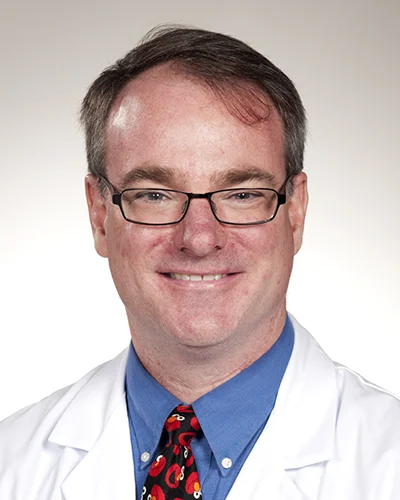
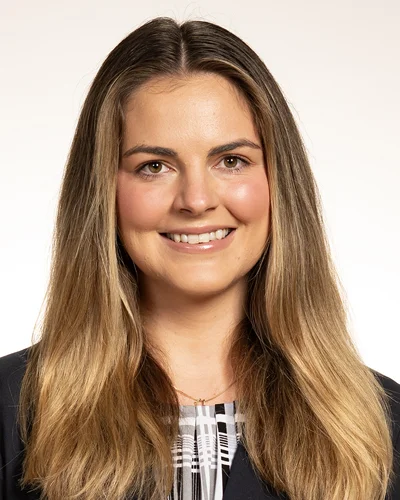
To help address this gap, Rebecca Delp (DO ’28), a third-year student in PCOM’s osteopathic medicine program, and Erik Langenau, DO, MS, MAPP ’23, professor of pediatrics and director of the Center for Teaching Support and Professional Development, co-authored “Firearm Safety and Suicide Prevention in Older Adults: A Primary Care Clinical Framework,” published in the Journal of Osteopathic Medicine. The report provides evidence-based recommendations to help primary care physicians identify suicide risk factors, initiate sensitive conversations about firearm access, and promote safe storage practices among adults aged 60 and older.
Delp's interest in the topic developed through her involvement with PCOM's SHELTER program, where she helped research and develop educational materials focused on firearm safety. Through that work, she recognized an opportunity to address suicide prevention among older adults through routine primary care.
“What stood out to me the most was the amount of older individuals that own a firearm and how little this was asked about in the primary care setting," Delp said. “There should be a balance between addressing safety concerns and respecting a patient's autonomy and independence.”
According to the study, approximately half of adults over age 60 in the U.S. live in a household with a firearm, and more than 25% of older firearm owners store at least one firearm loaded and unlocked. Certain circumstances can increase suicide risk among older adults, including depression, cognitive decline, social isolation, substance use, recent bereavement, and serious medical diagnoses. White men over age 70 experience the highest rates of firearm suicide in the United States.
Langenau described firearm suicide among older adults as a largely unrecognized public health concern.
“It's a quiet epidemic that isn't really being discussed,” he said. “Some of it is about agency and wanting to take control, but some of it is preventable. Some of it is related to depression or dementia, and those are things that primary care physicians can really focus on.”
The authors identify primary care as an important setting for prevention because physicians often maintain longstanding relationships with patients and regularly assess changes in physical and mental health. Langenau suggested incorporating firearm safety counseling into Medicare Annual Wellness Visits, alongside existing discussions about medications, nutrition, driving safety, and fall prevention.
Recognizing that firearm ownership can be closely connected to personal safety, independence, and identity, the report emphasizes nonjudgmental communication and shared decision-making. Rather than approaching firearm ownership as a problem to be corrected, physicians are encouraged to ask open-ended questions about storage practices and household safety.
The report outlines two established counseling approaches: the 5 A's framework—Ask, Advise, Assess, Assist, and Arrange—which guides physicians through safety discussions and follow-up care; and the 5 L's framework—Locked, Loaded, Little children, feeling Low, and Learned owner—which helps identify potential household risks.
Practical recommendations include storing firearms locked and unloaded, securing ammunition separately, and considering safety devices such as cable locks, biometric safes, and rapid-access lockboxes. For patients experiencing cognitive decline or dementia, Delp and Langenau also emphasize involving family members and caregivers in safety planning while preserving patient dignity and autonomy.
The report reflects osteopathic medicine's whole-person approach by considering how physical health, mental well-being, personal circumstances, and the home environment influence patient safety.
“The whole approach is osteopathic,” Langenau said. “We are hoping to address an issue that impacts agency, health, mental wellness, and safety.”
The authors also highlight opportunities to support physicians through educational materials, community partnerships, and established clinical resources, including PCOM's Firearm Safety for Seniors brochure. For Delp, developing the publication reinforced her interest in family medicine and demonstrated how student-led research can contribute to practical clinical guidance.
“Seeing the project develop from an initial interest in firearm safety resources into a published article was very rewarding,” she said. “It showed me how research can translate into practical resources for the community.”
Ultimately, Delp and Langenau hope the report encourages physicians to make firearm safety a routine component of preventive care.
“I hope physicians start to become more comfortable asking the questions,” Langenau said. “My desire would be for physicians caring for older patients to start the conversation, become more comfortable with firearm safety discussions, and direct families to resources that have been shown to be helpful.”
Established in 1899, Philadelphia College of Osteopathic Medicine (PCOM) has trained thousands of highly competent, caring physicians, health practitioners and behavioral scientists who practice a “whole person” approach to care—treating people, not just symptoms. PCOM, a private, not-for-profit accredited institution of higher education, operates three campuses (PCOM, PCOM Georgia and PCOM South Georgia) and offers doctoral degrees in clinical psychology, educational psychology, osteopathic medicine, pharmacy, physical therapy, and school psychology. The college also offers graduate degrees in applied behavior analysis, applied positive psychology, biomedical sciences, forensic medicine, medical laboratory science, mental health counseling, physician assistant studies, and school psychology. PCOM students learn the importance of health promotion, research, education and service to the community. Through its community-based Healthcare Centers, PCOM provides care to medically underserved populations. For more information, visit pcom.edu or call 215-871-6100.
For general media inquiries, please contact the Office of Marketing and Communications at 215-871-6300 or communications@pcom.edu. Visit our media relations page to view contact information for public relations personnel.
Kristen Hopf
Communications Content Specialist
Office of Marketing and Communications
Email: kristenho1@pcom.edu
Office: 215-871-6303