
Stay up to date with the latest stories and news from PCOM on Google.
Add us on GoogleTranslating Medicine: From Expertise to Understanding
August 25, 2026
By Jennifer Schaffer Leone
As health care grows more complex, medicine increasingly depends on translation as much as treatment.
Bridging Touch and Understanding
Science, touch and artistry converge in the work of Alexander King, DO ’17, RES ’20, FNAOME.
Before attending Philadelphia College of Osteopathic Medicine, Dr. King studied sculpture and neuroscience at Muhlenberg College. Raised in a family of physicians, including a grandfather who practiced acupuncture, he always intended to pursue medicine but did not encounter osteopathic manipulative medicine (OMM) until medical school.
“Sculpture taught me to think in three dimensions and use my hands with precision, which translates naturally to treating the human body through OMM,” he says.
Today, Dr. King serves as the interim chair of the Department of Osteopathic Manipulative Medicine at Rowan-Virtua School of Osteopathic Medicine, where he is also the medical site director of the Neuromusculoskeletal Institute and the program director for the Osteopathic Neuromusculoskeletal Medicine residency. He specializes in OMM and medical acupuncture, often treating patients with persistent symptoms that have not improved with prior care.
“Healing is not something we do to the body,” Dr. King says. “It is something we guide the body toward.”
That philosophy informs not only his patient care but also his growing role as a public educator. Through Instagram, TikTok, YouTube, and his “Golden Hands” podcast—now being adapted into a book—Dr. King has become a visible advocate for OMM and a voice pushing back against misconceptions surrounding the field.
“My goal is to make OMM accessible to everyone,” he says. “Not only for students and physicians, but also for the general public, who might not know anything about it.”
The podcast grew from Dr. King’s desire to tell deeper stories about OMM, particularly through conversations with physicians who found their way back to osteopathic tenets after training and working in other medical specialties. For Dr. King, those discussions offer an opportunity to explain a discipline that remains frequently misunderstood—even, at times, within medicine itself.
“One misconception is that OMM is alternative medicine,” he says. “In reality, it
is grounded in anatomy, structure and function.”
Dr. King says OMM is often dismissed online as unscientific or is conflated with chiropractic
care. Part of the challenge, he believes, is that OMM relies heavily on palpatory
skill and clinical intuition—expertise that can be difficult to quantify, but is developed
through years of patient care. He compares learning the modality to learning jazz:
mastering technique and structure first, then developing fluency through repetition
and practice.
“You understand OMM by treating thousands of patients and seeing the difference when they get off the table,” he says.
At the same time, Dr. King notes that research is increasingly validating what many OMM practitioners have long observed clinically. He points to emerging research at Stanford University exploring the physiologic mechanisms underlying cranial osteopathy and related therapies.
Dr. King sees a growing imperative for osteopathic physicians to explain their work clearly and to show research that affirms it, particularly in digital spaces where misinformation thrives.
“If physicians are not part of those conversations, misinformation fills the gap,” he says.
Turning Silence into Dialogue
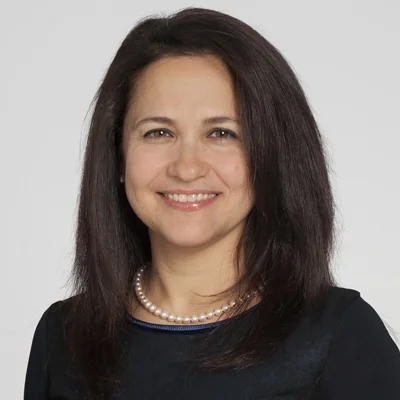
For Anna R. Spivak, DO ’14, FACS, FASCRS, the challenge of modern medicine extends beyond clinical practice; it is fundamentally about communication. As section chief of pelvic floor surgery at the Cleveland Clinic, she treats conditions that are deeply personal, frequently misunderstood and often difficult for patients to talk about.
“Many of my patients assume that what they are experiencing is normal or that it is simply something they have to live with,” Dr. Spivak says. “It is not. Moreover, they deserve care.”
Roughly 90 percent of her patients are older women, many of whom have spent years putting their own health on the back burner while caring for children, partners, aging parents and work.
“The conditions I treat aren’t cancer. They are functional problems,” she explains. “But they have a profound impact on quality of life.
“A central part of my job is helping patients understand that what they are experiencing is treatable,” she says. “I want to challenge the assumption that they just have to live with it—and break the silence around it.”
Through appearances on the Cleveland Clinic’s “Butts & Guts” podcast, Dr. Spivak translates complex colorectal and pelvic floor conditions into language listeners can understand. The goal, she says, is not to oversimplify medicine, but to make expert knowledge accessible.
“What I share publicly is the same information I give my patients,” she says. “It’s grounded in research, not hearsay.”
The podcast also serves as an access point, answering detailed questions and, in some cases, sparing patients a costly, travel-intensive visit to Ohio.
She speaks to healthcare professionals through podcast-based learning platforms like “BackTable,” where the focus is on practical insights, peer-to-peer education and mentorship.
However, as medical information has become more accessible, misinformation has spread just as quickly.
“We live in a time where there are endless opinions, but not all of them are rooted in clinical evidence,” Dr. Spivak says.
She increasingly sees patients whose expectations have been shaped by social media, online forums and patient influencers. Some arrive convinced they need surgery based on anecdotal success stories or unproven claims. Others turn to online-promoted “natural” treatments despite limited scientific evidence.
“The narrative can be powerful,” she says. “But it is not always grounded in data.”
Functional disorders can be especially vulnerable to misunderstanding. “Constipation, for example, is very rarely something surgery can fix,” Dr. Spivak explains. “Yet patients sometimes come in expecting surgery to be the solution. Part of my job is being honest—even when it’s not what they want to hear.”
Misinformation also includes AI-generated self-diagnoses, with patients arriving convinced that online tools or uploaded images confirm a condition.
“Access to information can be empowering,” she says. “But without the training to interpret it, it can also be misleading.”
More than half of the patients she sees are seeking second or third opinions, often shaped by conflicting advice. In those moments, Dr. Spivak relies on collaboration, working closely with colleagues across specialties and drawing on the clinical depth of the Cleveland Clinic to provide comprehensive care. Much of that work involves revisiting prior recommendations and clarifying how different interpretations of the same condition have arisen.
Distilling Complexity into Understanding
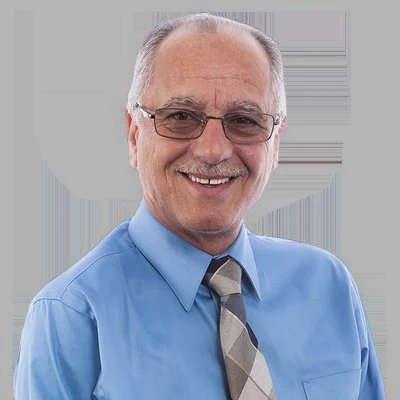
Who shapes the public understanding of health care often depends on who is willing to explain it. For Nicholas O. Biasotto, DO ’80, that responsibility has become an extension of clinical practice itself.
A family medicine physician and past president of the Medical Society of Delaware, Dr. Biasotto has spent decades working in clinical care, hospital leadership and health system governance. He has also chaired committees in bioethics, quality assurance and risk management, work that exposed him to the structural forces shaping both practice and outcomes.
He is drawn to questions that sit at the edge of medicine, policy and uncertainty itself. That perspective now drives his role as host of the “Delaware Health Care Reality” podcast, launched by the Medical Society of Delaware a year and a half ago.
“At first, I thought I would do two or three episodes,” he says. He recently completed his 45th.
Released every other week, the podcast has expanded its reach to listeners in 28 countries, with more than 3,000 followers and growing sponsorship support.
Before medicine, Dr. Biasotto taught middle school science, an experience that continues to shape his approach.
“I see my role as a teacher first,” he says. “It is how I have always made sense of things.”
The podcast work, he admits, is more fulfilling than he expected. He enjoys identifying guests, researching topics, and asking questions that translate complex medical, political, and systemic issues into accessible dialogue. Rather than commentary or wellness advice, he treats the podcast as an extension of medicine—one that feeds his own curiosity while helping listeners make sense of a rapidly changing healthcare landscape.
Episodes have examined food as medicine, psychedelic therapies, sleep apnea and renal failure, along with physician unionization, prior authorization reform, artificial intelligence in malpractice law, and broader systemic failures in American health care. Other conversations have highlighted emerging technologies such as the Galleri multi-cancer early detection test and gene-splitting therapies for sickle cell disease. Dr. Biasotto also regularly meets with Delaware legislators to discuss policies shaping care across the state.
“The role of the physician is to stay grounded in science,” he says. “Avoid speculation. Stay up to date with research.”
Now “semi-retired,” Dr. Biasotto practices within a concierge model serving approximately 400 patients, a shift from the 40 to 50 patients he once saw daily in a practice of over 4,000. The smaller scale has reinforced what also drives the podcast: Trust in medicine depends on time, clarity and informed conversation.
Doctors are no longer only providers of care. Increasingly, they are asked to explain what care means—and why it works the way it does.
For Dr. Biasotto, the goal has never really changed: to take what is complicated and make it understandable without losing its weight. A teacher and a physician, he is still doing both—still explaining, still clarifying, still returning to difficult ideas until they take shape in someone else’s understanding.